
The Opportunist
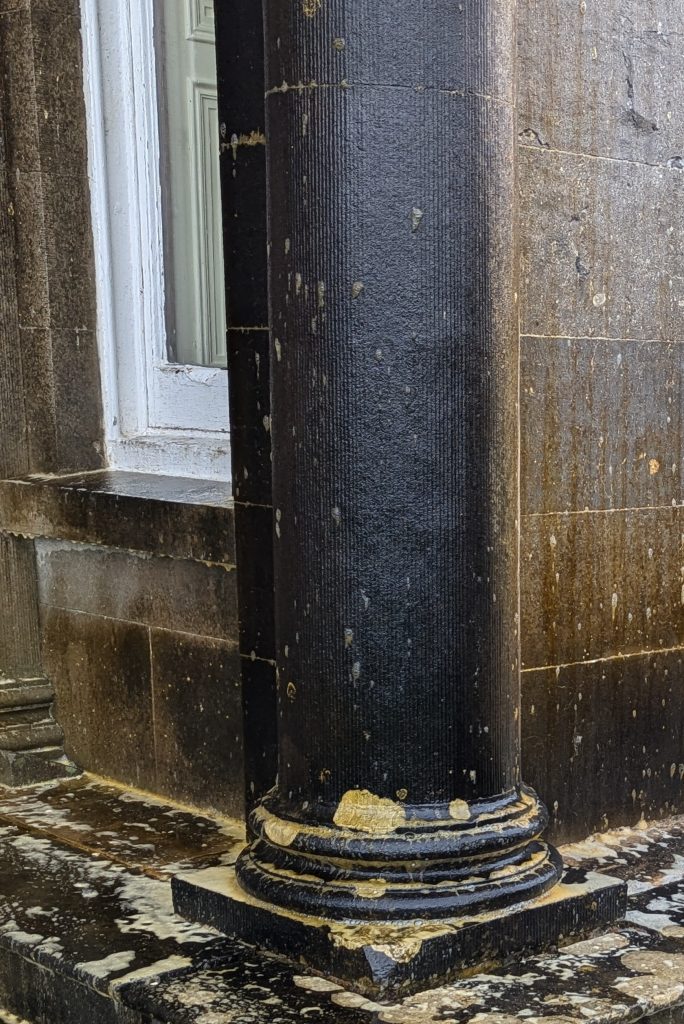
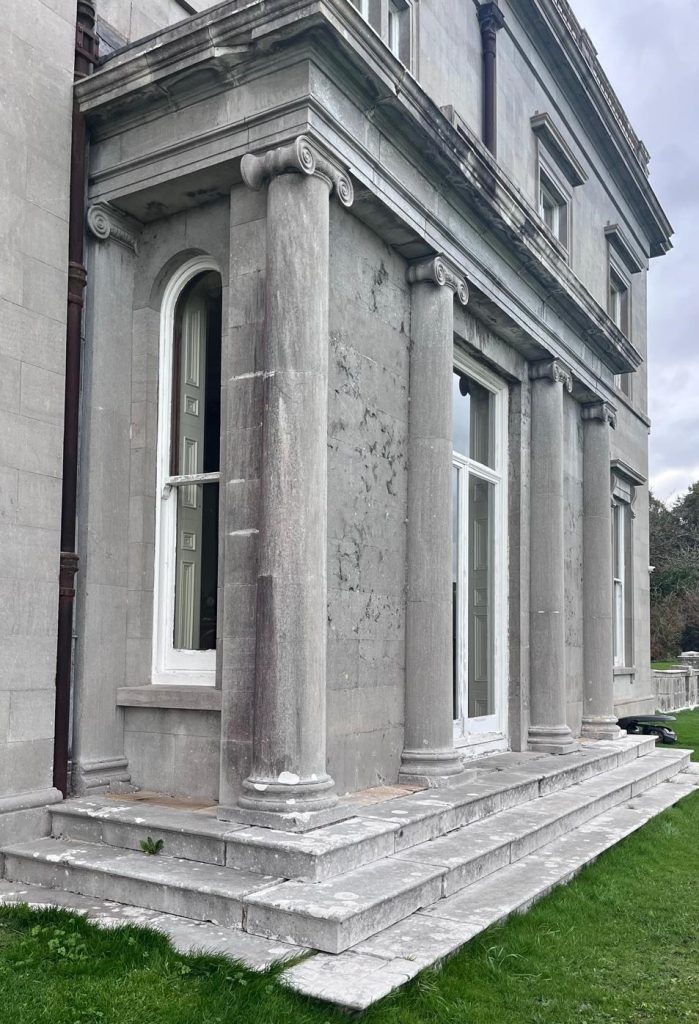
Black staining on exterior walls is often assumed to be dirt or pollution.
In most cases, it is fungal growth.
Unlike algae, fungus does not produce its own food. It depends on organic material to survive, which is why it is rarely the starting point.
What is fungus
Fungi are microorganisms that feed on organic matter.
On exterior surfaces, this usually means:
- dead algae
- organic debris
- damp surface conditions
This is why fungus is commonly found wherever algae has already established itself.
Why fungus appears
Fungus thrives in conditions where moisture is consistently present.
Common contributing factors include:
- leaking or blocked downpipes
- shaded areas that do not dry out
- north-facing walls
- surfaces that retain moisture
In these environments, fungal growth can develop quickly once the conditions are right.
What causes the black staining
The dark colour associated with fungus comes from a pigment called melanin.
This pigment:
- protects the fungus from sunlight
- makes it more resistant to environmental conditions
- causes the deep black or dark grey appearance
Because of this, fungal staining can appear heavier and more persistent than other types of growth.
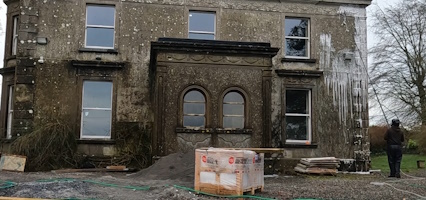
This property was neglected for many years. Fungus has taken hold, especially on the dampest areas
Why fungus follows algae
Fungus depends on organic material.
Algae provides that.
As outlined in our guide, fungi feed on organic matter, including dead algae, and tend to appear wherever algae is already present.
This means:
- algae establishes first
- fungus follows
- the surface becomes darker over time
Why it can take time to disappear
Even after treatment, black staining may remain visible for a period.
This is because:
- the fungus must first die
- the melanin needs to break down
- natural weathering removes the residue
This is a gradual process and can take several months depending on conditions.
The correct approach
Treating fungus directly is not enough.
The key is to address the underlying algae.
A pH-neutral exterior treatment works by:
- targeting the algae
- compromising its cell wall
- stopping the biological cycle
Once the algae is no longer active:
- the fungus loses its food source
- it dies off
- the staining gradually fades
This approach avoids damage and deals with the cause rather than the symptom.
Common mistakes
Fungal staining is often treated as dirt.
This can lead to:
- aggressive cleaning methods
- surface damage
- temporary results
If the underlying biology is not addressed, the problem will return.
Conclusion
Fungus is a visible and often concerning form of staining.
But it is not the starting point.
It is a secondary organism, dependent on the presence of algae.
Understanding this is essential to treating the problem properly and avoiding unnecessary damage.