

Red and Green algae are in charge!
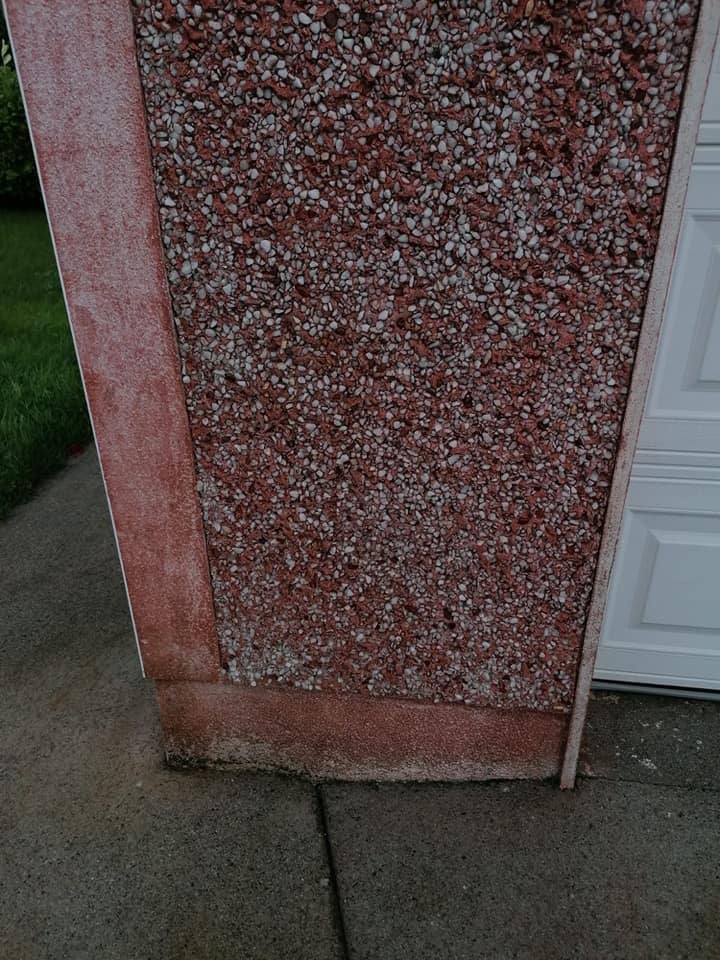
When people notice staining on their walls, it is often the red colour that draws attention first.
It stands out. It looks unusual. It raises concern.
But red algae is only part of the picture.
Green algae is just as important — and often more widespread.

What is algae
Algae are microscopic organisms that grow on exterior surfaces.
They are carried in the air and settle wherever conditions allow.
On buildings, they appear mainly as:
- Red staining (often very visible)
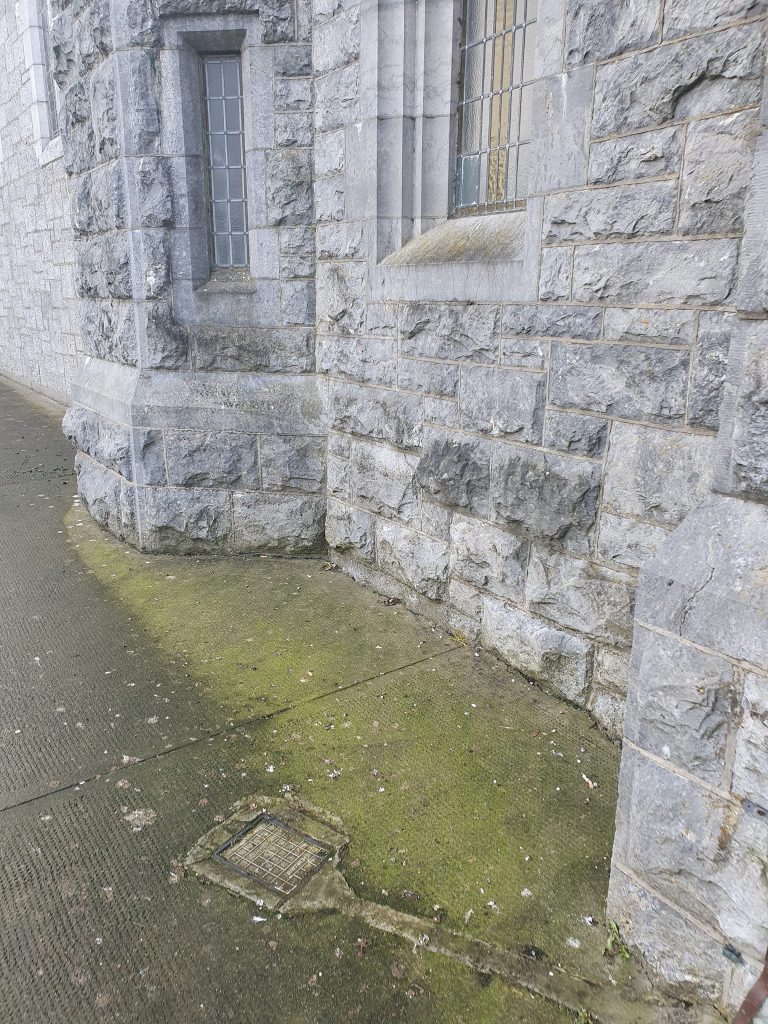
- Green staining (often more subtle but more extensive)
Both are forms of the same underlying problem.
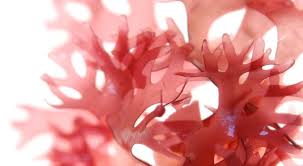
Microscopic view of red algae
Why algae grows
Algae needs very little to establish itself:
- moisture
- shelter
- a surface with microscopic texture
Exterior walls provide all three.
Even surfaces that appear smooth have tiny pores and irregularities where algae can settle and grow.
Once established, it spreads across the surface as a thin biological layer.
Why red algae gets the attention
Red algae is more noticeable because of its colour.
The pigmentation comes from compounds within the cells that become visible as the algae develops.
This is why:
- it often appears in streaks or patches
- it can look more severe than it actually is
Because it is so visible, it is often assumed to be the main problem.
Why green algae matters just as much
Green algae is often less obvious, but more widespread.
It can:
- cover large areas of a wall
- appear as a dull or slightly discoloured surface
- go unnoticed for longer
In many cases, green algae forms the base layer that allows other organisms to develop.
As outlined in our guide, algae acts as the foundation of the system, supporting fungus, lichen and moss.
What happens once algae is established
Algae does not exist in isolation.
Once it is present:
- it creates a biological surface layer
- it traps moisture
- it provides conditions for other organisms
This allows:
- fungus to develop
- lichen to form
- moss to take hold in damp areas
Over time, the surface becomes more heavily colonised.
Why it is the ringleader
Algae is not just one of the organisms.
It is the one that starts the process.
Without algae:
- fungus has no base to develop
- lichen cannot form in the same way
- moss struggles to establish
This is why algae is the key to understanding the problem.
How it should be treated
If algae is the starting point, it must also be the focus of treatment.
A pH-neutral exterior treatment works by:
- targeting the algae directly
- compromising the cell wall
- rendering it inactive
Once the algae is no longer active:
- the biological cycle is interrupted
- the remaining growth dies off
- natural weathering gradually clears the surface
This process takes time, but it avoids damage and addresses the cause.
A different way of looking at staining
Instead of focusing on colour:
- red
- green
- black
It is more useful to understand the role each organism plays.
In most cases:
algae is the beginning of the story
Conclusion
Red algae is often what people notice first.
Green algae is often what has been there the longest.
Both are part of the same process — and both point to the same underlying issue.
If the algae is not addressed properly, the problem will continue.