
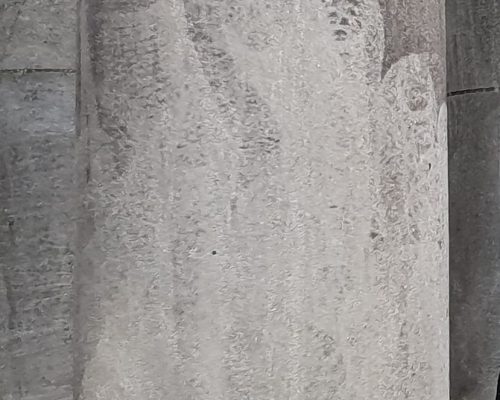
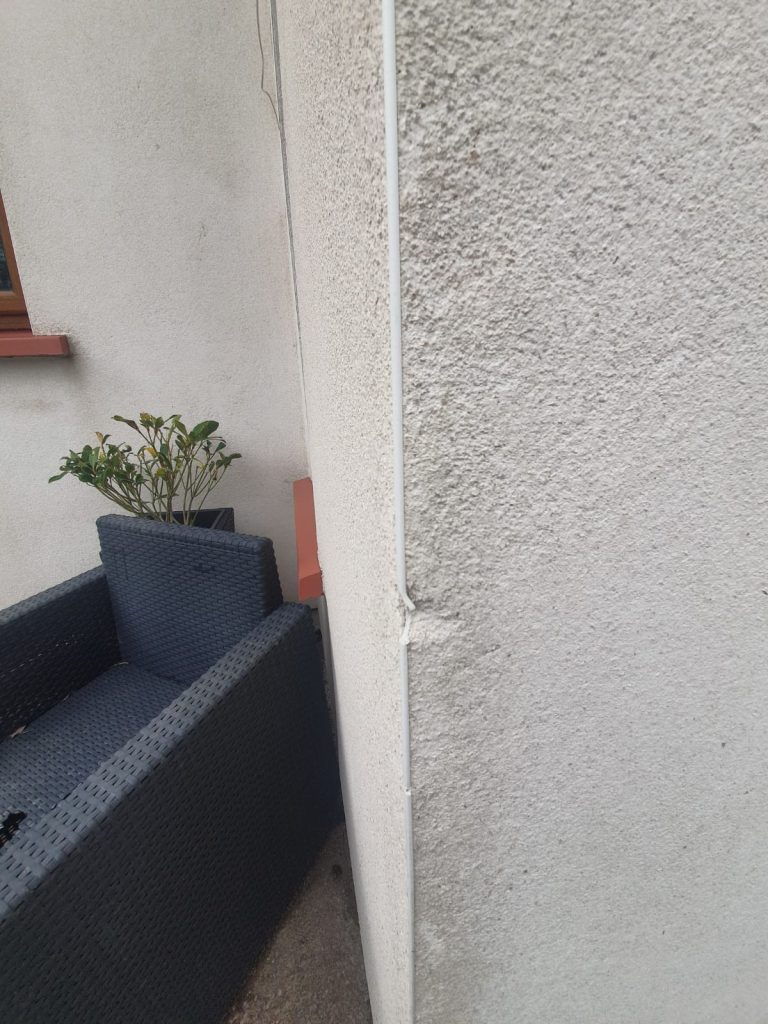
Exterior treatment is often judged by the immediate visual result. A façade that appears brighter or a roof that looks free from staining may be taken as evidence of a successful intervention.
However, for historic buildings, the true impact of exterior treatment is rarely visible on the day the work is completed.
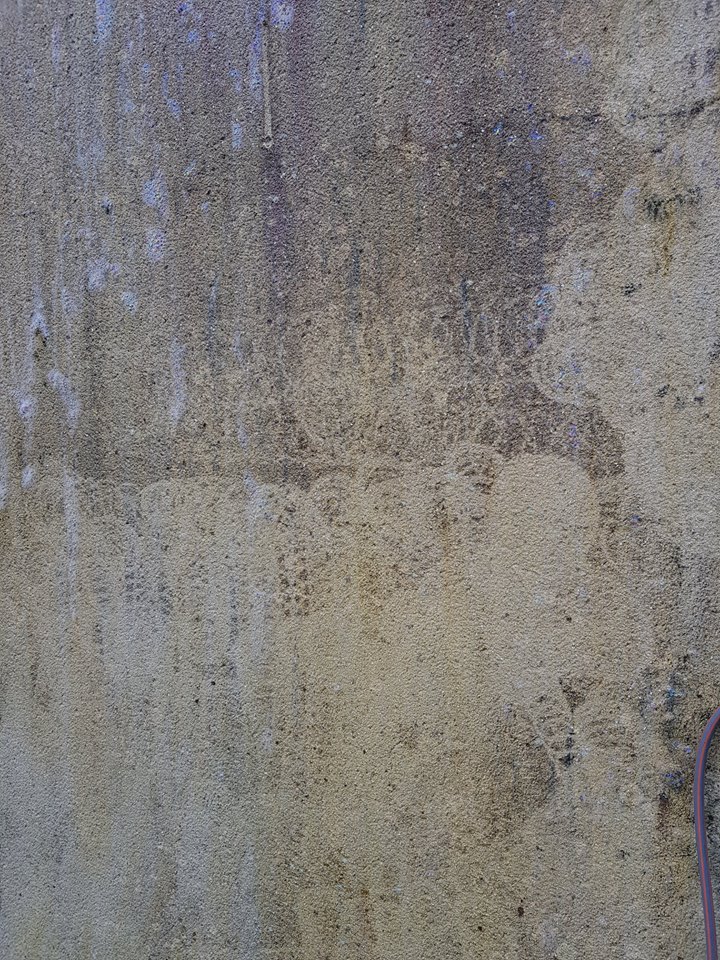
Materials such as limestone, sandstone, lime render and natural slate are porous and complex. They interact with moisture, temperature and biological growth in ways that can take months or even years to fully reveal.
The method chosen to treat biological staining therefore matters as much as the result.
Surface change and increased porosity
One of the most common issues associated with aggressive cleaning methods is the alteration of the surface itself.
High-pressure washing and abrasive techniques can remove not only biological growth but also the natural patina that protects stone. In some cases, microscopic fissures can be opened or existing pores enlarged. Once this occurs, the material becomes more vulnerable to moisture retention and future colonisation by algae and fungi.
Over time this can lead to surfaces that appear to deteriorate faster than before intervention.
As discussed in our earlier article on the risks associated with unregulated exterior treatment, the lack of consistent standards across the sector means the responsibility for selecting appropriate methods often rests with the building custodian.
Biological growth and the stone surface
The interaction between microorganisms and building materials is complex. Algae, fungi and lichens form biofilms that can both discolour and physically affect stone surfaces.
Research has shown that microorganisms living within stone can produce compounds capable of altering the minerals within the substrate itself. Expansion and contraction during wetting and drying cycles can also contribute to physical stress within the stone matrix. Definitive Guide To Biomass Gro…
This means that the removal of biomass requires careful consideration of both the organism and the material it inhabits.
The importance of compatible treatment methods
Modern conservation practice increasingly focuses on targeted biological treatment rather than mechanical removal.
By addressing the organisms responsible for the staining — particularly algae, which form the base of the biomass ecosystem — it is possible to resolve the visual issue while avoiding physical damage to the substrate.
This approach prioritises long-term material stability rather than immediate visual transformation.
Further information on the biological processes involved can be found in the National Inventory of Architectural Heritage, which provides guidance on the care and conservation of historic structures.
Stewardship and responsibility
For custodians of churches, monuments and protected structures, the key question is not simply how a building looks after treatment.
The more important question is how that building will perform ten or twenty years later.
Exterior treatment should therefore be approached as a conservation intervention — one that respects the fabric, history and long-term behaviour of the building itself.
If you are responsible for the care of a building and would like to discuss appropriate exterior treatment methods, you are welcome to contact Hennessy-Ward on 0851688714 for advice.