
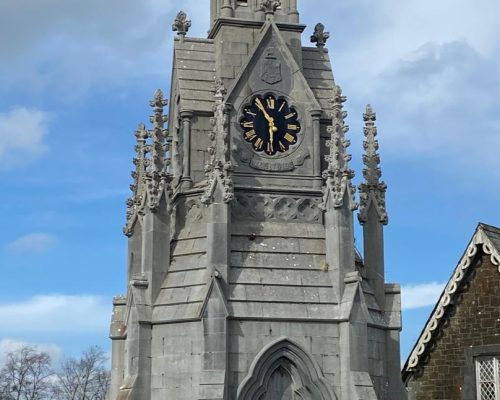
Exterior treatment work sits in a curious position within the built environment sector.
On one hand, it involves direct intervention in historic and modern fabric — stone, lime render, slate, timber, lead, glazing and delicate architectural detail. On the other, it remains largely unregulated. There are no universally recognised competency thresholds, no mandatory accreditation pathways, and limited oversight regarding methodology or chemistry.
For custodians of churches, protected structures and heritage buildings, this creates a structural risk.
The removal of biological growth is not merely a cosmetic exercise. As outlined in our earlier discussions on biomass, exterior staining is typically caused by algae, fungi, lichens and moss. These organisms interact with moisture, substrate and time. Intervention therefore affects both appearance and material integrity.
Where competence varies, outcomes vary.
Common issues observed within the wider sector include:
- The use of excessive water pressure on porous stone and lime-based materials
- The application of highly caustic chemicals not designed for façade treatment
- Inadequate understanding of substrate behaviour
- Limited awareness of long-term material consequences
- Insufficient documentation of chemical composition or Safety Data Sheets
In conservation-sensitive contexts, such variability can accelerate deterioration. Increased porosity, loss of patina, surface etching and repeated biological colonisation are not always immediately visible. In some cases, damage becomes apparent only years later.
Professional responsibility in this field requires:
- Understanding biological growth mechanisms
- Selecting pH-neutral, substrate-compatible systems
- Avoiding abrasive or force-based methods
- Reviewing Safety Data Sheets before application
- Considering long-term material performance rather than immediate visual effect
Exterior treatment should be viewed as a conservation intervention, not a cosmetic service.
In an unregulated marketplace, the responsibility for assessing competence often rests with the building owner or custodian.
What criteria should be used to assess professional competence in exterior treatment of historic buildings?
You may wish to contextualise this discussion within Ireland’s broader heritage framework. The National Inventory of Architectural Heritage (NIAH) provides guidance and classification for structures of architectural significance, highlighting the importance of safeguarding original materials and character. Where a building is listed or of recognised heritage value, any exterior intervention should be approached with the same level of consideration and professional responsibility that underpins its inclusion in the national record.